


Asset management in a nutshell
In this post

1
2
3
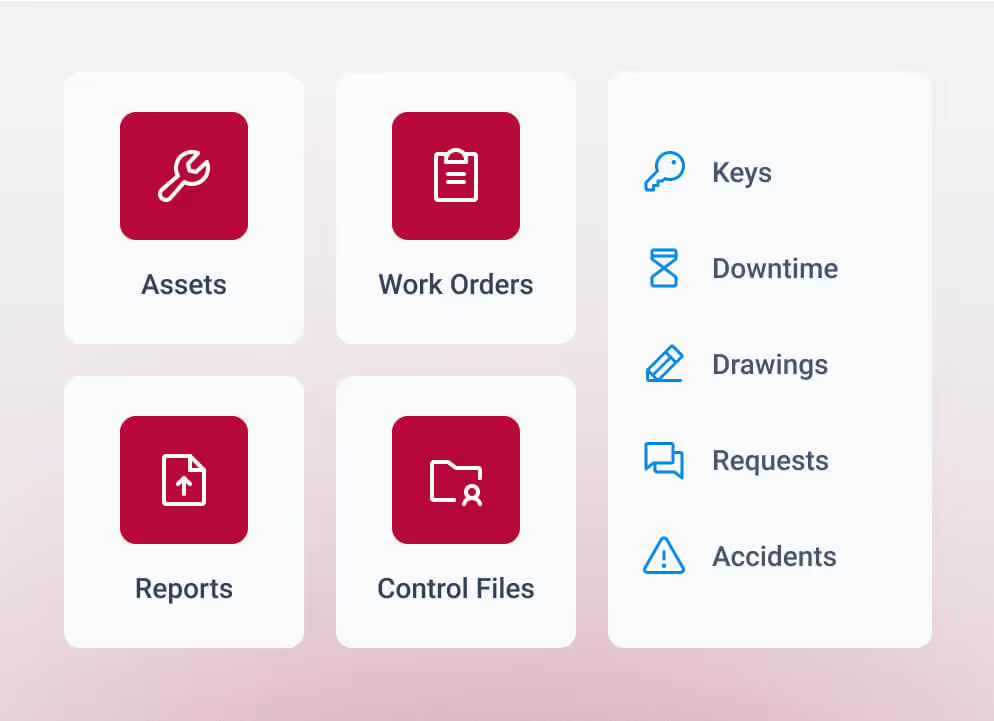
Asset management is about maintaining visibility and control over every asset within your operation; whether in a facility, factory, or mine. With MEX CMMS, you can monitor performance, schedule maintenance, and extend the life of critical equipment.
Asset Management Explained
Asset Management is a very simple thing. You are the manager of a lot of stuff. Whether it is a Facility, Factory or Mine site. You have equipment that needs maintaining, and that maintenance is costing you money.
Ask yourself, am I doing the right thing? Are we effectively utilizing our maintenance budget?
This is where capturing all your work data is important. And this data will help to better manage your equipment by helping you determine what budget is spent maintaining and replacing equipment.
Why Data Matters in Asset Management
Take for example the Facility Manager of an apartment building. He would have so many assets to keep track of.
If the building has 200 apartments, each of them would obviously have a kitchen and each kitchen has a stove installed.
So the general scenario is that if something goes wrong, you call a contractor in and they fix it and go away. No data recorded, you pay the contractor and your tenants are happy.
This is done each time the stove breaks down, and all is well but without the right data, you may not realize that the one stove may be costing you so much on repairs over the last couple of months.
By having a system to help you keep track of what's going on. You start to notice trends in your data and can then make the decisions based on those trends.
Decisions like whether it's more cost effective to just buy a new stove as opposed to continuing to maintain it.
Beyond Maintenance: Safety and Insights
Another great aspect of Asset Management (also known as Enterprise Asset Management) is that it also allows you to capture accident data.
Helping you to identify trends in accidents and determine if there is a particular operator in question of a certain piece of equipment.
The Value of an Asset Management System
With so much gear, it's hard to know what's going on without the right system in place to track all the work that is being done on your assets.
That's where an Asset Management system comes in. It's the concept of having that data, whatever it may be, to help you better manage your operation.
The same can be applied to a fleet of cars, trucks, or manufacturing equipment. Essentially that's Asset Management in a nut shell.
What You Can Improve with the Right System
With the right Asset Management system (or EAM) in place you will start to see improvements in:
- The way your maintenance budget is used
- What time is spent maintaining assets
- The safety of your personnel
- The impact on your business in terms of more efficiently operating equipment
- Easier access to the right documentation side of things
- Best of all, a comprehensive record of job history recorded
Asset management will save you a lot more than just money.
- Identify repair trends, reduce unnecessary work orders, and improve budget efficiency across facilities, factories, and mine sites.
- Gain visibility into equipment history, maintenance costs, and equipment downtime through accurate data tracking.
- Regular monitoring and scheduling with a CMMS extends asset life; improving safety, performance, and ROI across all assets.
Download your whitepaper now
You’re all set!
Your eBook is on its way to your inbox. We hope it brings fresh insights and practical takeaways to help you get more from your maintenance operations.




Asset Management Explained
Asset Management is a very simple thing. You are the manager of a lot of stuff. Whether it is a Facility, Factory or Mine site. You have equipment that needs maintaining, and that maintenance is costing you money.
Ask yourself, am I doing the right thing? Are we effectively utilizing our maintenance budget?
This is where capturing all your work data is important. And this data will help to better manage your equipment by helping you determine what budget is spent maintaining and replacing equipment.
Why Data Matters in Asset Management
Take for example the Facility Manager of an apartment building. He would have so many assets to keep track of.
If the building has 200 apartments, each of them would obviously have a kitchen and each kitchen has a stove installed.
So the general scenario is that if something goes wrong, you call a contractor in and they fix it and go away. No data recorded, you pay the contractor and your tenants are happy.
This is done each time the stove breaks down, and all is well but without the right data, you may not realize that the one stove may be costing you so much on repairs over the last couple of months.
By having a system to help you keep track of what's going on. You start to notice trends in your data and can then make the decisions based on those trends.
Decisions like whether it's more cost effective to just buy a new stove as opposed to continuing to maintain it.
Beyond Maintenance: Safety and Insights
Another great aspect of Asset Management (also known as Enterprise Asset Management) is that it also allows you to capture accident data.
Helping you to identify trends in accidents and determine if there is a particular operator in question of a certain piece of equipment.
The Value of an Asset Management System
With so much gear, it's hard to know what's going on without the right system in place to track all the work that is being done on your assets.
That's where an Asset Management system comes in. It's the concept of having that data, whatever it may be, to help you better manage your operation.
The same can be applied to a fleet of cars, trucks, or manufacturing equipment. Essentially that's Asset Management in a nut shell.
What You Can Improve with the Right System
With the right Asset Management system (or EAM) in place you will start to see improvements in:
- The way your maintenance budget is used
- What time is spent maintaining assets
- The safety of your personnel
- The impact on your business in terms of more efficiently operating equipment
- Easier access to the right documentation side of things
- Best of all, a comprehensive record of job history recorded
Asset management will save you a lot more than just money.


Related resources
You’ve seen what’s possible—connect with us to learn how TMA Systems can support your goals beyond the event.
You’ve read the insights, now see how TMA Systems helps teams put them into practice.
From ideas to impact
You’ve read the insights, now see how TMA Systems helps teams put them into practice.
From screen to solution
You’ve watched what’s possible, now see how TMA Systems works for your organization.
From insight to implementation
You’ve explored the strategies, now see how we can bring them to life across your real facilities.